
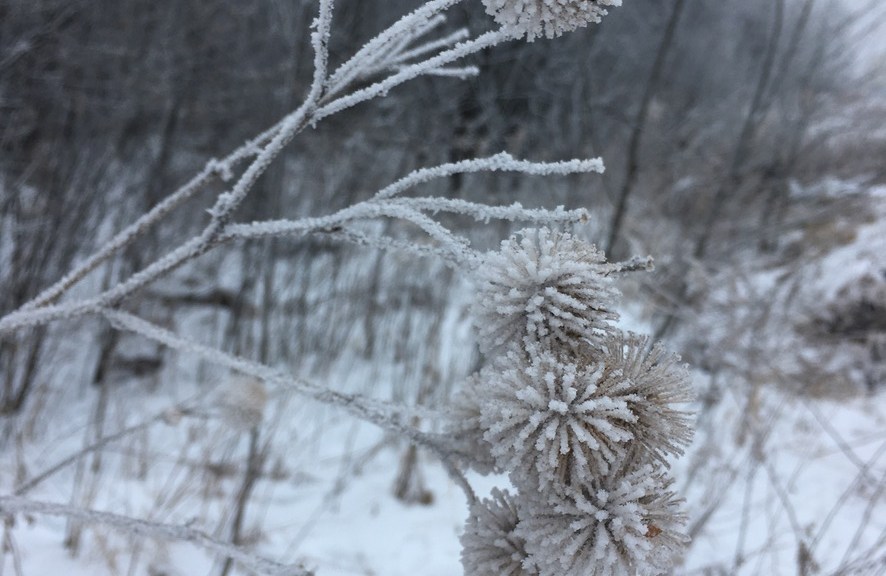
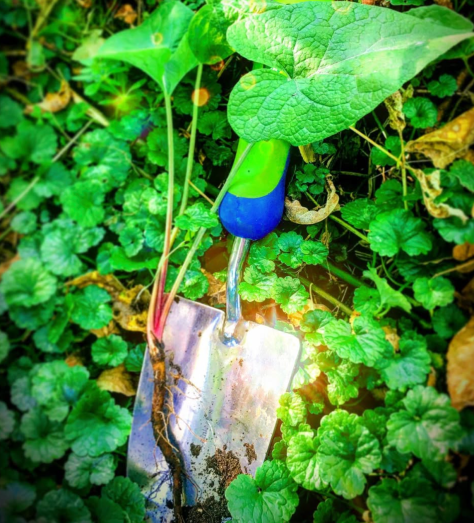
No childhood is complete without coming home with dreaded cockleburs either in your hair on embedded into the cuffs of your socks. Much to those youngsters’ surprise, though, is that those cockleburs belong to a plant that has much to offer… it may have been just trying to get your attention! This time around, it just might “stick”!
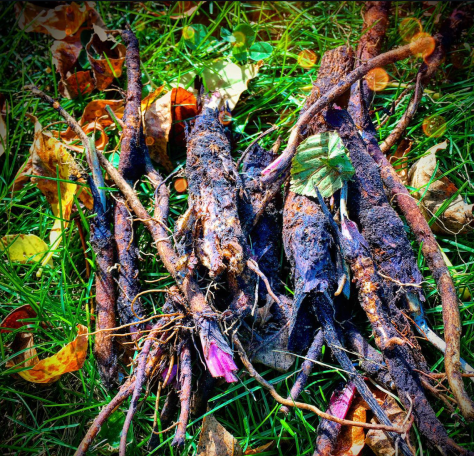
Their fleshy taproot is what is most commonly thought of when it comes to harvesting the plant, as burdock root is a well-known lymphatic detox regime. The root, along with some other parts are also delectible. and well worth keeping the little “stickers” around.
IDENTIFICATION: Burdock will start growing low to the ground in mid spring, usually in April, in a rosette pattern. Its leaves are solid green and smooth on top, with a heavily veined, light green/grayish underside. They are broad (can reach up to 2 feet long), with a slight heart shape to them, and look very similar to rhubarb. The stems are very fiberous, and are somewhat like celery.
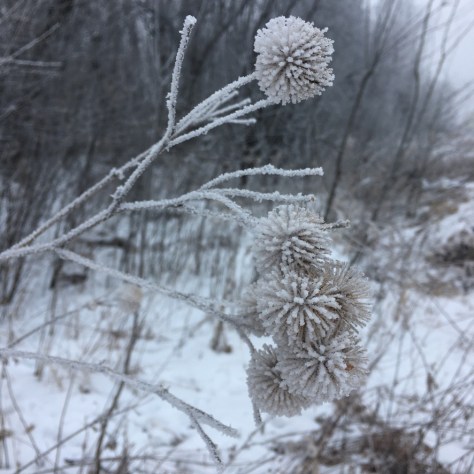
As a bienniel plant, their life cycle takes two years, and it is not until their second year that they will have a flowering stalk, later developing into the signature cockleburs (rounded balls up to the size of a penny covered in velcro-like burrs). The first year the plant will not shoot up a flowering stalk, but instead will stay lower and develop root stores for the second year.
USES: Burdock has both culinary and medicinal uses. The roots can be used medicinally in teas, tinctures,, or topical poultices, or they can be roasted, fried, or prepared in stirfries, gobo, or in soups. Leaves can be used for wrapping food, and flowering stems can be used as a delightful vegetable dish.
HARVESTING: Being a biennial plant, the life cycle will affect the quality of the desired parts depending on where it is at in its stages. First year burdock will stay low to the ground and never develop a flowering stalk nor cockleburs. From here, you can determine what and when to harvest your desired product.
(Click here to view foraging calendar).
Leaves. The burdock will produce huge leaves mid to late summer. The leaves can be used in a pinch to wrap food to cook over a fire, or simply to be used in food preparation as a naturally, food safe, large surface.
Flowering Stalk. In their second year, in early summer (early June here in Minnesota), the plant will begin ‘bolting’, meaning it will shoot up a flowering stem very quickly. Unlike many of the other stems of the plant, this one will appear slightly different, rising directly from the center of the plant and it will come straight up with a fully round stalk.
Before it grows too tall, as once it starts developing too much it will become tough and too fibrous to be enjoyable. It should have a healthy snap to it and feel solid but not yet stringy, usually best around one to two feet tall before any flowers are developing and it becomes woody. Cut the stalk low to the ground, and cut off the top portion that gets rather narrow, as after peeling there will be nothing left here.
You will then peel/strip all the exterior “strings” and fibers, essentially removing all green, red, and purple shaded flesh, revealing a solid white center that is almost of a solid potato texture. It will oxidize quickly with the air, turning brown fast. Once all the fibers are gone (this will take time and patience, with tedious attention to detail), you can chop up this beautiful vegetable into usable chunks.
Roots. The fall is one of the best times to harvest, but spring is also a second best option if you can find a burdock emerging for its second year as it will still have all the stored nutrients in the roots before it releases them into the new emerging plant. The taproot is usually quite long, (think long like a carrot) so use a spade straight down and as deep as you can, staying far enough away from plant to avoid cutting/breaking the root). Once extracted, simply shake the dirt off and collect what you will use.
– Rinse the roots with several washes to clear them of dirt and debris. I did this outside with a bucket.
– You can use a softer brush to get the dirt from the crevices but be careful not to scrub away the deep, dark outside layer, as this is not dirt, rather nutrient rich skin.
– Once clean, dice up the roots using a sharp knife. (You can also grate them, but you most likely need a good grater as this did not serve me well).
– (You can use the root fresh to cook and serve as a vegetable dish at this stage,)
– Lay out on a screen/drying rack in a darker, dry room for 2 to 3 weeks. Turn them once in a while to ensure no moisture entrapment.
– Once it’s completely dry, store them in an airtight container.
RECIPES:
- Burdock Tea
- Burdock Flowering Stalk Vegetable
- Burdock Root Vegetable
BENEFITS:
-High in antioxidants
-Purified the blood
-Prevents cancer
-Contains tannins (skin & acne)
-Aids in blood sugar (diabetes)
-Anti-inflammatory
-Helps with infections (tonsils/UTI)
-Can help swollen lymph nodes
-Assist to lower blood pressure
ECOLOGICAL CONSIDERATIONS: Coming Soon!
POSSIBLE LOOKALIKES: Coming Soon!
WORDS OF CAUTION: Coming Soon!
DISCLAIMER: This page is intended to inspire and raise awareness of the natural word, and is not a replacement for a field guide or expert experience, nor is it intended for medical treatment or advice.
Always be 100% sure of your identification before ingesting any foraged food.Always cross-reference the information you find on the internet with an expert, a foraging group, and several reference books.
Proper identification is entirely a forager’s responsibility. . . and it is not to be taken lightly. Wild food, much like cultivated food, will produce unique results in each unique person as allergies and reactions are an ever present reality.
The experiences noted on this website are personal, but shared for your enjoyment and exploration, but are not to replace professional experience. This disclaimer is not to create fear, but rather to instill a healthy respect for the responsibility of foraging and utilizing nature in a responsible way, both for the longevity of nature and yourself, as it can only be achieved by you, as this website, owner, nor its affiliates cannot be held responsible for your actions or use of the information provided.
 The Forest Walker