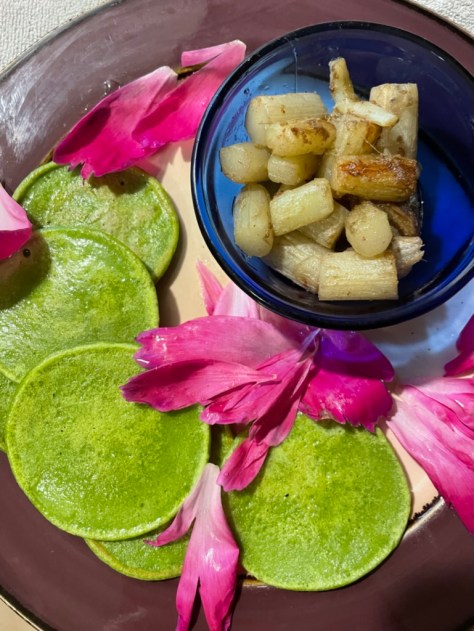
FLOWERING STALK PREPARATION:
Though the flowering stalk pith can be eaten raw, and enjoyed somewhat reminiscent to celery raw, it will become even more creamy with a nutty, earthy flavor with just a hint of sweetness taking on any aromatics it is prepared with. You can add this to stir fries or soups, but it is rather delectable being partially boiled/steamed with a bit of water on the bottom of a pot, boiled/steamed until it softens a bit, then lastly lightly fried with a touch of butter, salt, and garlic, making a delightful vegetable dish.
(To better acquaint yourself with identification, and harvesting considerations please visit Burdock Identification & Harvesting page).
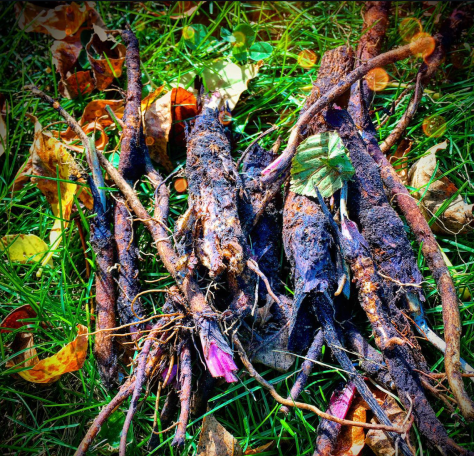
ROOT PREPARATION
– Rinse the roots with several washes to clear them of dirt and debris. I did this outside with a bucket.
– You can use a softer brush to get the dirt from the crevices but be careful not to scrub away the deep, dark outside layer, as this is not dirt, rather nutrient rich skin.
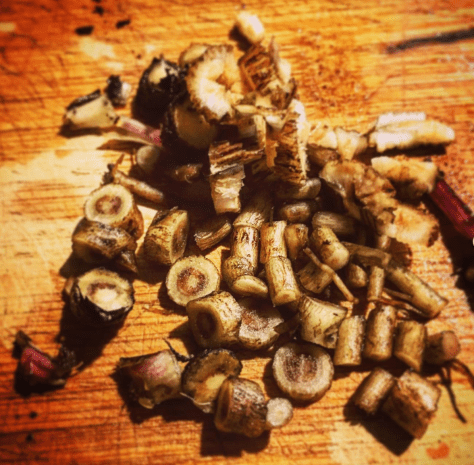
– Once clean, dice up the roots using a sharp knife. (You can also grate them, but you most likely need a good grater as this did not serve me well).
– (You can use the root fresh to cook and serve as a vegetable dish at this stage,)
– Lay out on a screen/drying rack in a darker, dry room for 2 to 3 weeks. Turn them once in a while to ensure no moisture entrapment.
– Once it’s completely dry, store them in an airtight container.
BURDOCK TEA
2-3 cups/day of tea is used as a supplement (consult your doctor)
– Simply put some dried burdock root in a pot with water and bring to a boil (1 tsp burdock:7 oz water)
– Simmer for 20 minutes while covered.
– Mixes well with dandelion root, ginger, cinnamon, and licorice root for an immune boosting tea.
 The Forest Walker