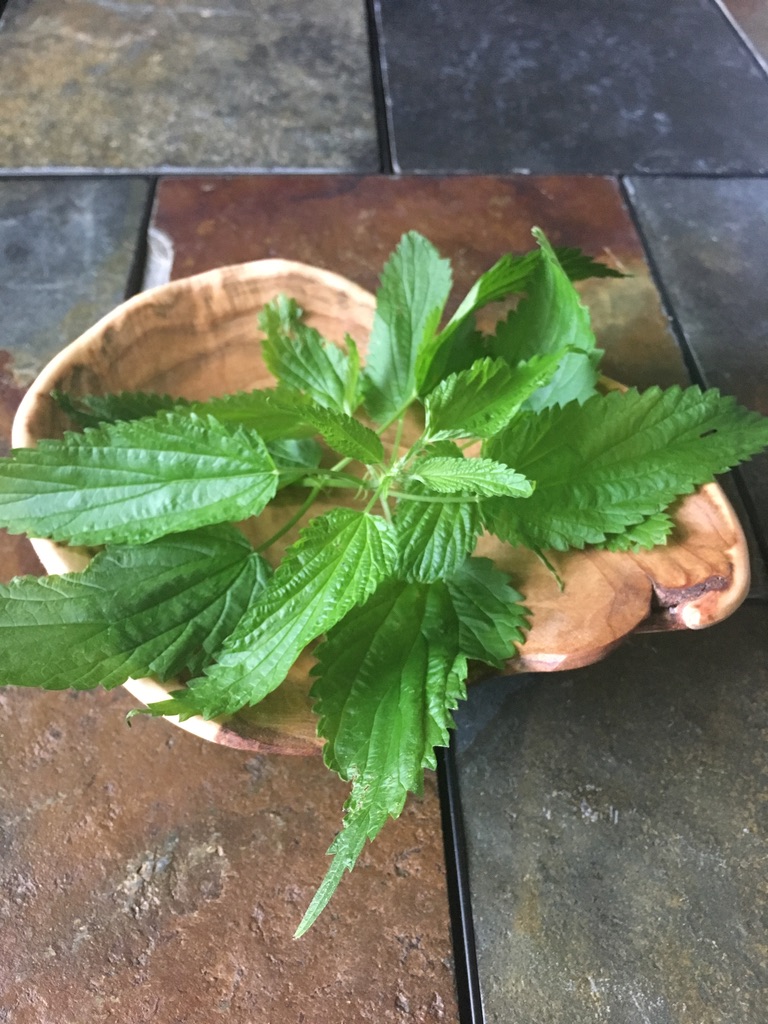
If you are an outdoor adventurer, you have had your share of encounters with Stinging Nettle. Don’t let their sting scare you off, though, as it may have been their desperate attempt to get your attention being they are a wild edible with a complex, deep flavor, and an even more impactful nutritional spectrum.
IDENTIFICATION: Nettles may grab your attention with their itchy sting when you are least expecting it, and then ironically be covert when you set out to look for them. Often found along woodland edges, trails, and disturbed areas, the stinging nettle appears as one of the earliest young greens in the spring, hidden by last year’s grasses and dead foliage, but can soon stick out above the crowd when they can reach nearly 6 feet in some stands. Wood nettles will often be found a bit later, nearing summer, carpeting shaded forest floors in large groupings, even in flood plains.
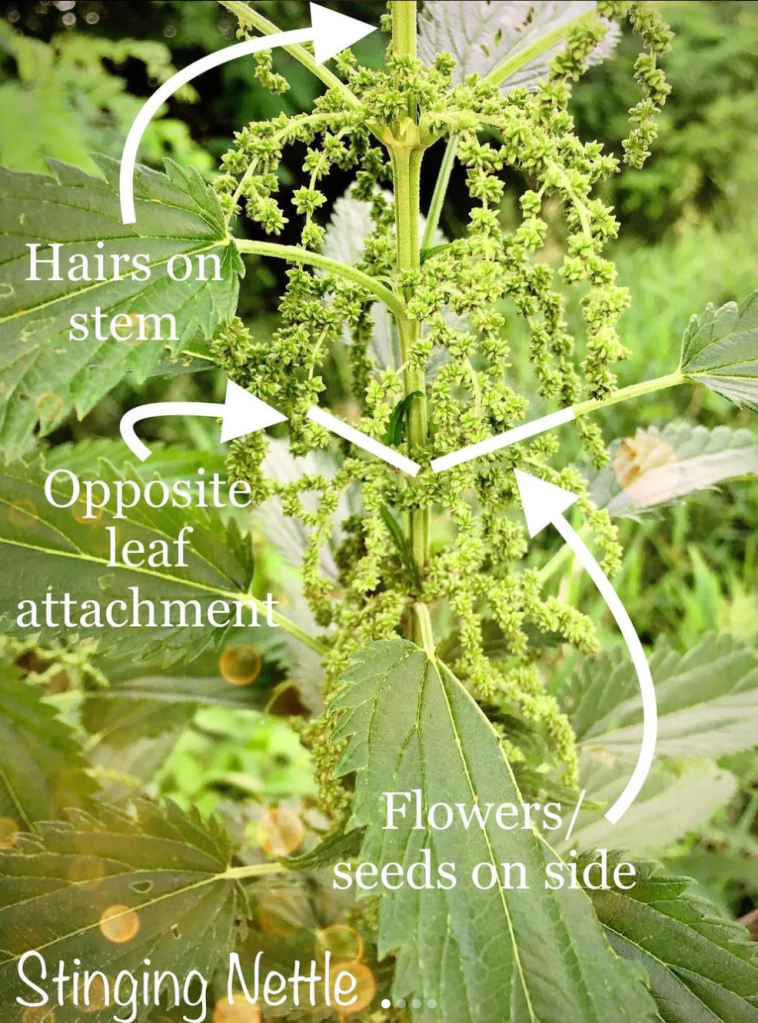
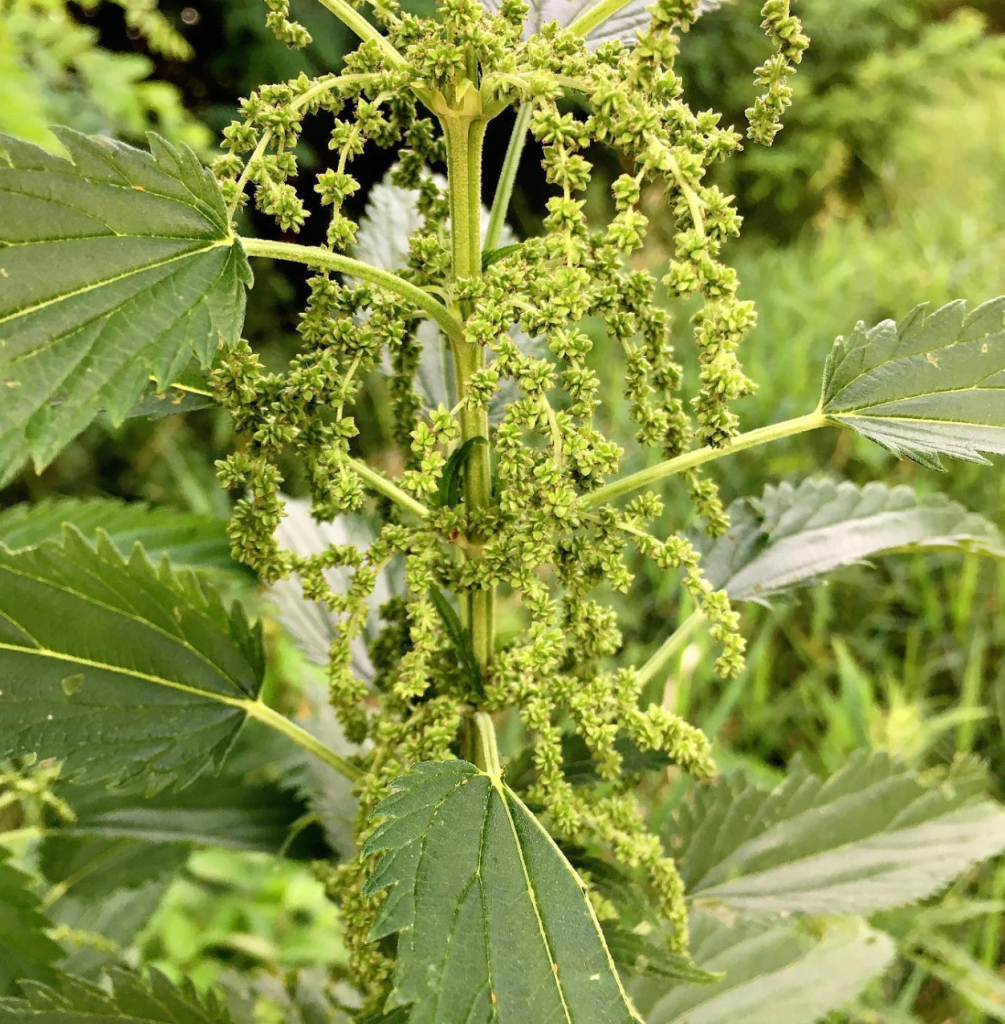
Both specimens feature rich green foliage, and visible “stinging hairs” on the plant. Though very similar in name and benefits, they do look somewhat different from each other. Stinging nettle will have hairs on the stem, dark green leaves with visible veins and serrated edges attached oppositely to the light green stem. Once the plant matures, it will produce “flowers” in the form of seed heads that plume from the sides of the stem towards the top of the plant under the umbrella of its upper leaves, but not from the top.
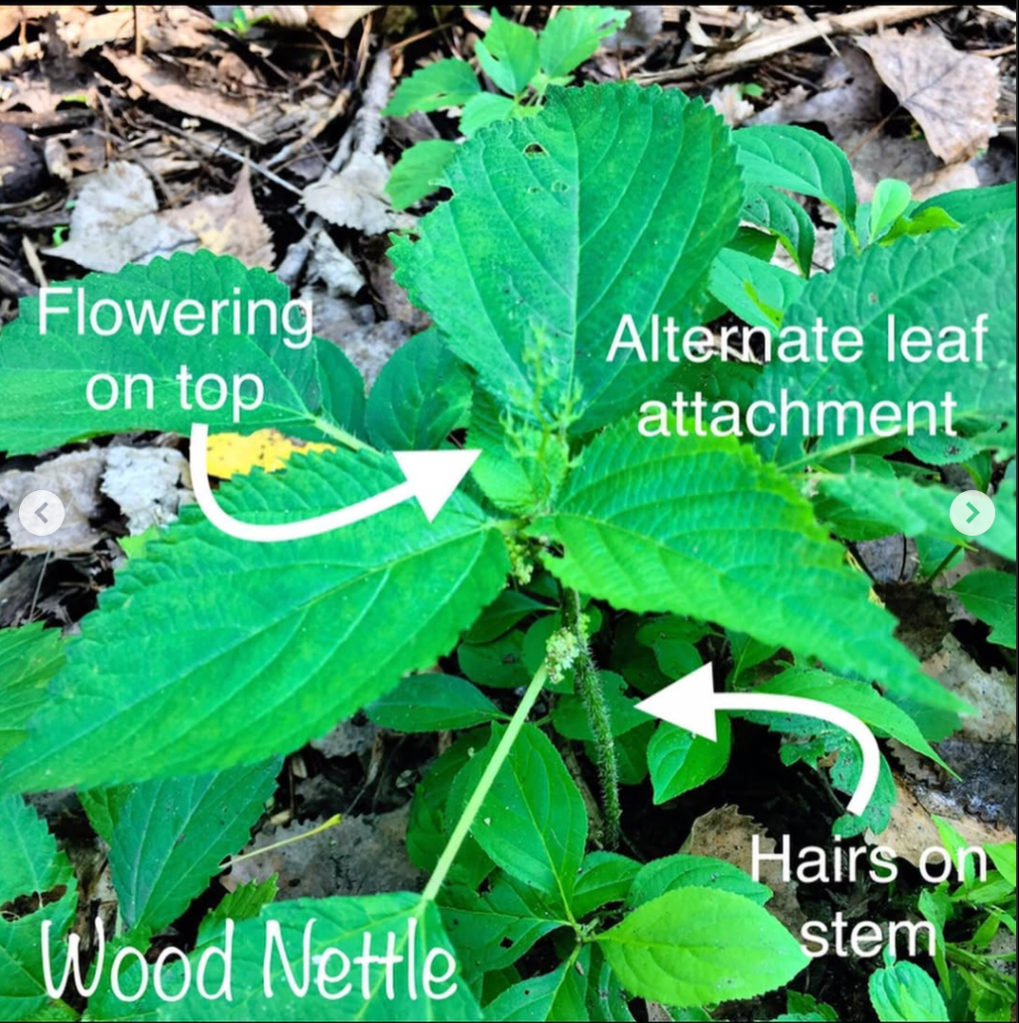
Wood nettle too features serrated leaves with stinging hairs on the stems, but its leaves are arranged with an alternate attachment. When it flowers, it will display its seeds on top. This plant can grow rather tall as well, nearly 40 inches tall, often waist high. In personal experience, the wood nettle seems to pack a more pungent sting with longer lasting effects than the stinging nettle, contrary to what the names would suggest.
Nettles are easily confused with some toxic, and even lethal look-a-likes that are covered in the POSSIBLE LOOKALIKES section below.
USES:
HARVESTING:
Leaves.
Seeds.
RECIPES:
- Stinging Nettle Tea
- Greens (Taco Filling, Stirfries)
- Stinging Nettle Pancakes
- Wild Ravioli
BENEFITS:
ECOLOGICAL CONSIDERATIONS:
Ensure where you are harvesting is a place free of chemicals such as those used in lawn treatments or field oversprays. Chemicals such as roundup can stay in the ground up to 20 years according to some studies, thus making it most wise to avoid harvesting anywhere chemicals were likely used.
POSSIBLE LOOKALIKES: Stinging nettle offers a wide array of benefits, but if you forage the wrong plant you could wind up seriously ill, and even death could result. White snakeroot is deadly toxic plant and has some similarities in appearance that could fool you. One of the choice times to forage stinging nettle is when they are young shoots in the spring, with only a few leaves exposed. It also looks similar to clearweed and wood nettle, which are both also edibles, but don’t have the same sought after medicinal properties as the stinging nettle. (Even though very little research has been conducted, some claim wood nettles may have similar benefits).
| Plant | Flower Position | Hairs on Stem | Leaf Attachment |
| Stinging Nettle | Sides | Yes | Opposite |
| Wood Nettle | Top | Yes | Alternate |
| Clearweed | Side | No | Opposite |
| Snakeroot | Top | No | Opposite |
WORDS OF CAUTION:
DISCLAIMER: This page is intended to inspire and raise awareness of the natural word, and is not a replacement for a field guide or expert experience, nor is it intended for medical treatment or advice.
Always be 100% sure of your identification before ingesting any foraged food.Always cross-reference the information you find on the internet with an expert, a foraging group, and several reference books.
Proper identification is entirely a forager’s responsibility. . . and it is not to be taken lightly. Wild food, much like cultivated food, will produce unique results in each unique person as allergies and reactions are an ever present reality.
The experiences noted on this website are personal, but shared for your enjoyment and exploration, but are not to replace professional experience. This disclaimer is not to create fear, but rather to instill a healthy respect for the responsibility of foraging and utilizing nature in a responsible way, both for the longevity of nature and yourself, as it can only be achieved by you, as this website, owner, nor its affiliates cannot be held responsible for your actions or use of the information provided.
 The Forest Walker