Sleek, playful, and resourceful, these aquatic mammals run the boreal rivers as though they were the very water that coursed them. Turning banks into slides, ice into fishing holes, and rivers into their playgrounds, they are seldom seen. With a trained eye, they leave obvious imprints on the river’s edge.

River otters earn their name by spending the majority of their time in, on, and around rivers. They are known for their playfulness which is clearly seen in the signs they leave behind from their nocturnal rompings. Their sleek fur provides a slick coat upon which to slide down the river banks, either snow or mud, and across icy river surfaces. Sometimes choosing this mode of travel over their all fours out of sake of speed, but other times it seems apparent to be chosen for pure pleasure: for play.
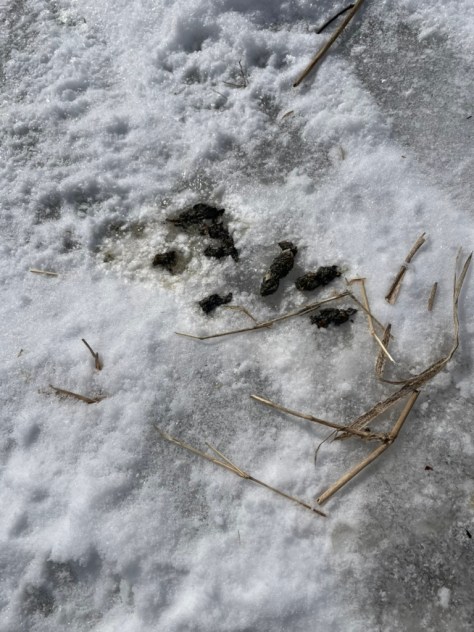
Their diet consists of fish and aquatic creatures, and they will devour the entire dish to their satisfaction. When they are full they will leave a half eaten fish on the bank making it easy to see where they were feasting, but if their tummy could fit the entire catch, they leave nothing behind. Their complete inhalation of their meal does make their scat that much more revealing as it contains fish scales and bits of its seafood menu.
Otters hole up on river banks making their homes called holts where they bear their young. Well hidden, they can be hard to find, but once discovered seem to scream for attention with what looks like careless debris of their comings and goings.


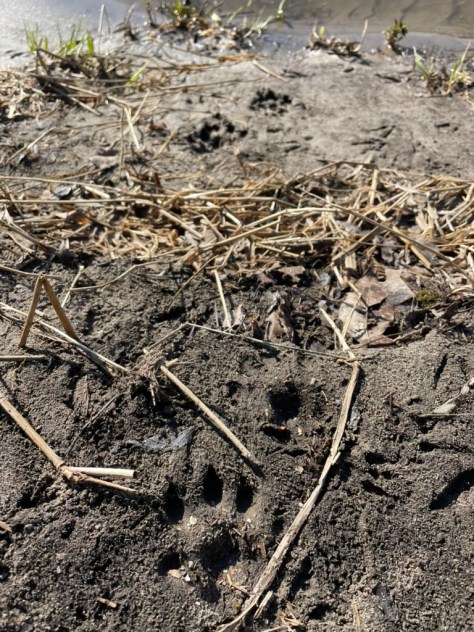
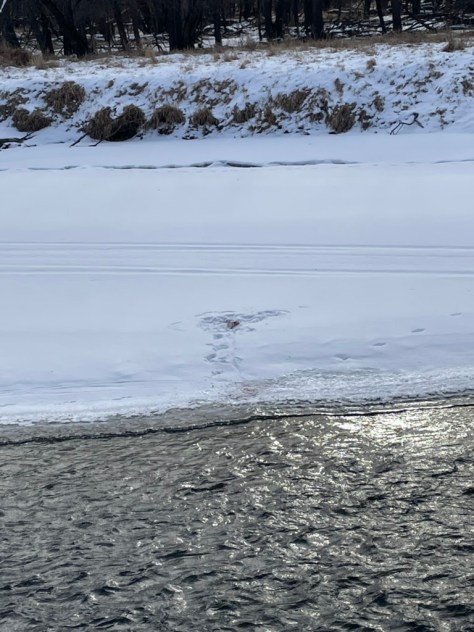
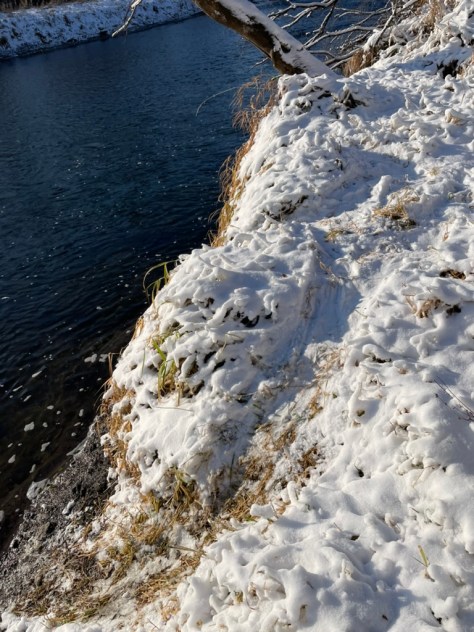
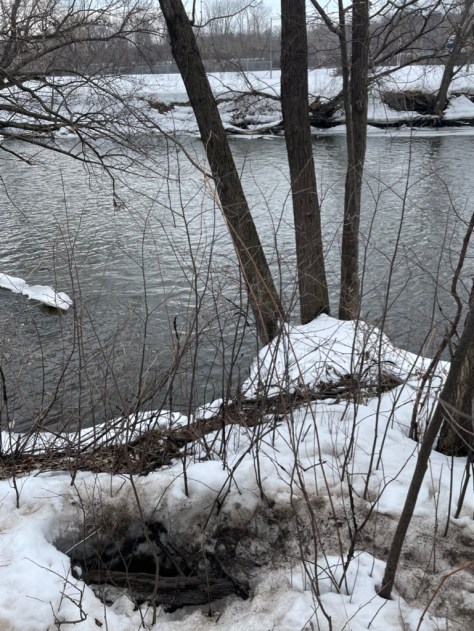
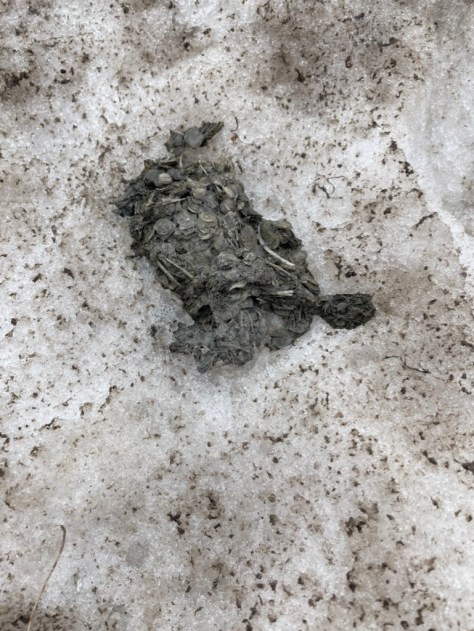
River otter’s tracks are quite large, usually measuring around four inches. They will often lope, or bound through the terrain (most commonly around 16″ between 2×2 lope clusters), with their signature slide appearing intermittently throughout their course. Compared to the American Mink, their slides are much wider, usually measuring up to 12″ wide, and appearing on not only downhill spots like mink do for efficient travels, but Otters do it for play as well, thus sliding on flat ground and even sometimes uphill.
Otters will use several temporary resting spots as dens, including beaver dams, muskrat lodges, or just hollows, and will heavily mark near these sometimes. They also have latrines on common meeting points with other otters to serve as a message board between participants.
 The Forest Walker